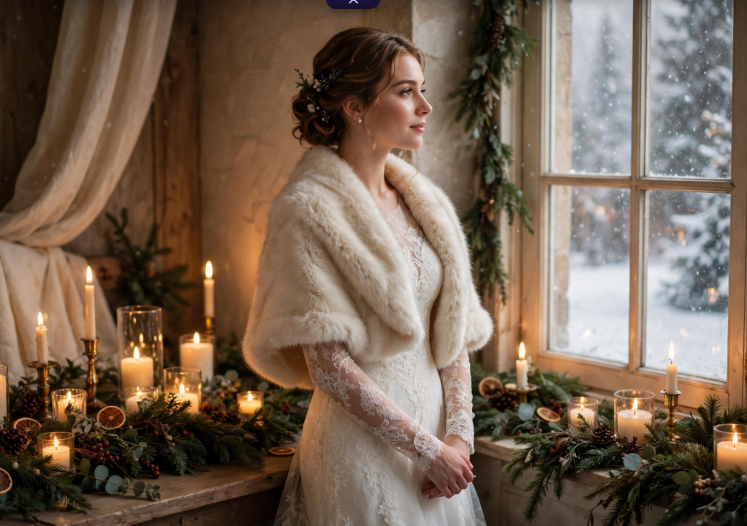
Guests talk about winter weddings for years. Candlelight glows at four in the afternoon. Rich colours fill the room. Cosy food warms every table. A soft hush falls when everyone steps in from the cold. I genuinely think winter weddings are underrated. But listen to winter brides. Every bride I have spoken to tells a similar story. The day itself was beautiful. Yet two or three small cold-weather details nearly tripped it up. The pretty planning checklists missed all of them. That is because most checklists were written for spring weddings. None of this is difficult to fix — you just have to think of it before the week of the Wedding Winter Planning Guide, when there is no time left.
Here are the twelve things brides forget most, in the order you should deal with them.
The 12 forgotten things
1. Your daylight disappears by mid-afternoon
This is the big one. In winter it can be dark by 4 p.m., which means a 2 p.m. ceremony leaves almost no time for outdoor portraits afterwards. Talk to your photographer first, not last. Many winter couples do a ‘first look’ and portraits before the ceremony, or start the ceremony earlier than they planned. Golden, natural-light wedding photos are a scheduling decision, not luck.
2. A warm wrap that actually matches your dress
Brides remember the dress and forget they will spend real time outside — travelling, posing, greeting guests. A random cardigan over a wedding dress looks exactly as mismatched as it sounds. Order a faux-fur wrap, a tailored wool coat, or a long-sleeved bolero in a tone that suits your dress, and do it early while you can return and exchange. Your bridesmaids need a plan too, or they will be blue-lipped in every group photo.
Ask your venue how the room is heated, when the heating starts, and whether entrance areas stay warm — churches and barns can be freezing in the first hour. Small things help enormously: hot drinks on arrival, a basket of inexpensive blankets for older guests, and a note on the invitation if the ceremony space runs cool.
4. Travel time — doubled, with a plan
Icy roads, fog, and early darkness slow everyone down. Build a generous buffer into every journey that day — yours, your suppliers’, and your guests’. Confirm what happens if a vendor is delayed by weather, and keep the ceremony start flexible by 20 minutes in your own head, even if you never tell anyone. Telling out-of-town guests about the nearest reliable taxi option and the closest hotel saves a flurry of stressed phone calls at midnight.
5. Shoes that survive wet ground
Delicate satin heels, wet grass, and a muddy path between the car and the door are a sad combination. Choose closed-toe shoes or block heels for winter, protect satin with a suitable spray in advance, and keep a clean pair of indoor shoes and a small towel in your emergency kit. Heel protectors are cheap and genuinely useful for any outdoor photos on grass or gravel.
6. Your flowers are seasonal — and cold-sensitive
Some favourite blooms are out of season in winter, which means higher prices or imports that arrive tired. Ask your florist what is naturally good at that time of year — ranunculus, anemones, roses, eucalyptus, and evergreen foliage all shine in winter. Also ask how bouquets will be transported: certain delicate flowers dislike being left in a freezing car, so timing the drop-off matters more than it does in July.
7. Dry skin, chapped lips, and static hair
Cold air outside and heating inside is brutal on skin. Step up moisturising in the two weeks before (with products you already know your skin tolerates), keep lip balm in every bag, and have hand cream ready — your hands are in half your photos, rings included. Static is the winter hairstyle gremlin: ask your stylist for anti-static finishing products and keep a dryer sheet trick or mini serum in your touch-up kit.
8. Lighting for the evening you actually get
Most of a winter reception happens in artificial light, so lighting becomes the atmosphere itself. Candles (real where allowed, good LED where not), warm fairy lights, and uplighting transform a dark room. Check flame rules early, and photograph your decor mock-up in evening light, not at noon.
9. A realistic coat and belongings plan
One hundred guests in winter means one hundred heavy coats and umbrellas at your venue entrance. Confirm there is a cloakroom or designated room, plus somewhere for wet umbrellas that is not the gift table. It sounds trivial until it is your first impression of the reception space.
10. Hot food and drinks that suit the season
Winter guests arrive cold and hungry, and they remember being warmed up. Soup starters, a proper hot main, mulled drinks or hot chocolate at the bar, and warm canapes on arrival all land beautifully in winter. Ask your caterer about keeping food hot during a longer drinks reception, because cold rooms cool plates fast.
11. Illness season — your backup people
Winter is cold and flu season, and it does not respect wedding dates. Identify a backup for the roles you cannot lose: who can drive, who holds the rings if the best man is ill. Pack a small kit with painkillers, lozenges, and tissues. And protect your own sleep in the final week — guard it like an appointment.
12. The sparkler or confetti photo needs darkness timing
Dreaming of a sparkler exit? Winter darkness is an advantage — schedule that photo at 7 p.m. while everyone is still energetic instead of at midnight. But long sparklers, working lighters, and a metal bucket for spent sparklers need arranging in advance, and your venue may have rules. Check now, not on the day.
A simple winter timeline adjustment
If I could change one thing for winter couples, it would be this: shift everything 60 to 90 minutes earlier than your summer-wedding instinct tells you, and protect the portrait slot like it is an appointment with the sunset. Share the final timeline with every vendor in writing, including the words ‘sunset time’ next to the photo session. Photographers adore couples who do this, and your album will show you why.
Then relax about the rest. Plan for the cold and dark now — it is an afternoon’s work — and the season becomes your biggest advantage instead of your biggest risk.
FAQs
What is the best ceremony time for a winter wedding?
Early enough to finish portraits in daylight — often a ceremony around midday to 1 p.m., depending on your location and date. Confirm sunset time for your exact date and work backwards with your photographer.
How do I keep guests comfortable at a winter wedding?
Warn them on the invitation if the venue runs cool, heat the space before they arrive, offer hot drinks on arrival, and provide blankets for older guests. A cloakroom for heavy coats helps more than people expect.
Which flowers are best for a winter wedding?
Seasonal choices such as ranunculus, anemones, and roses, styled with eucalyptus and evergreen foliage, look beautiful and tend to be better value than out-of-season imported blooms.
What should a winter bride wear over her dress?
A faux-fur wrap, a tailored wool coat, or a lace bolero chosen to match the dress’s tone and neckline. Order it early, try it on with the dress, and plan wraps for your bridesmaids too.
Is a winter wedding cheaper than a summer wedding?
Often, yes — many venues and suppliers offer off-peak rates outside the summer months, though dates around Christmas and New Year are the exception. Always ask; the savings can be significant.