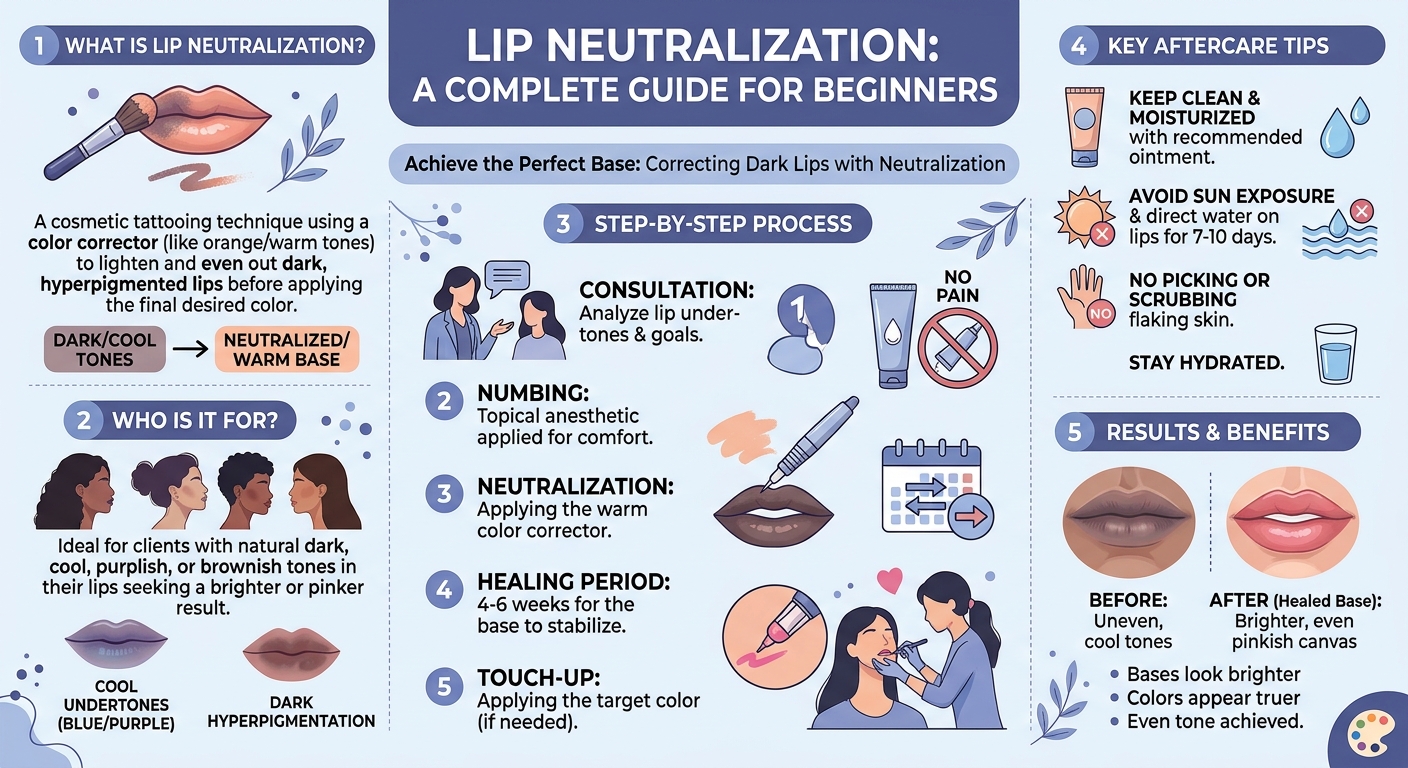
Lip colour can vary from person to person. Some people have naturally pink lips, while others have brown, purple, grey, or uneven tones. This cosmetic treatment uses specialised pigments to soften darker areas and create a more even lip tone. However, lip neutralisation is not the same as applying lipstick. It is a form of cosmetic tattooing that places pigment into the lip skin. The results develop over time and require careful aftercare.
In this guide, you will learn what lip neutralisation means, how the procedure works, its benefits, possible risks, healing stages, and how to care for your lips afterwards.
What Is Lip Neutralisation?
Lip neutralisation is a cosmetic tattooing technique designed to balance uneven or darker lip tones. A trained professional uses selected pigments to help reduce the visual contrast between different areas of the lips.
The treatment is often discussed in relation to melanin-rich lips, which may naturally have brown, purple, or grey undertones. These colours are not a problem that needs to be corrected. However, some people choose cosmetic treatments because they prefer a different appearance.
During the procedure, a specialist assesses the natural lip colour and chooses pigments based on the client’s skin tone and desired result. Depending on the starting colour, the practitioner may use warm shades to help balance cooler or darker tones.
Lip neutralisation does not remove melanin from the skin. Instead, it adds cosmetic pigment to influence the visible colour of the lips.
The final result varies from person to person. Natural lip colour, pigment selection, technique, and healing all affect the outcome.
How Does Lip Neutralisation Work?
Lip neutralisation works by placing cosmetic pigment into the superficial layers of the lip tissue using a specialised tattooing device.
Before treatment, the practitioner examines the natural lip colour. Darker areas may need a different pigment approach from lighter areas. For this reason, the treatment plan should be customised rather than based on one colour for everyone.
1. Lip Colour Assessment
The practitioner checks the natural colour of the lips, including any differences between the upper and lower lips. They may also discuss previous lip tattoos, medical history, allergies, and expectations.
This step helps determine whether the treatment is suitable.
2. Pigment Selection
Pigments are selected according to the natural undertones of the lips and the intended result. Warm peach, coral, or orange-based shades may be considered for some darker or cooler lip tones.
However, pigment choice requires professional knowledge. Using the wrong shade or applying too much pigment can create an unwanted result.
3. Pigment Application
A cosmetic tattooing device is used to deposit pigment into the lips. The practitioner works carefully across the treatment area to create a balanced appearance.
The procedure may cause discomfort, swelling, and temporary redness. A topical numbing product may be used when appropriate, although it cannot always eliminate discomfort.
4. Healing and Colour Development
The lips may look brighter or more intense immediately after the procedure. As the skin heals, the colour can soften and change.
The final appearance cannot be judged on the first day. Some clients need more than one session to reach their desired result, depending on their natural lip colour and how the skin responds.
Benefits of Lip Neutralisation
Lip neutralisation may appeal to people who want a more balanced lip appearance without applying lipstick every day.
Here are some potential benefits.
More Even-Looking Lip Colour
One of the main goals is to reduce the visible difference between darker and lighter areas. This may create a more uniform appearance across the lips. However, complete colour uniformity is not guaranteed. Natural pigmentation can remain visible after treatment.
A Softer Natural Appearance
When performed well, lip neutralisation can create a subtle result that works with the person’s natural lip colour. The aim is not necessarily to make the lips bright pink. Instead, the practitioner may choose a shade that produces a more balanced and natural-looking finish.
Less Dependence on Lip Makeup
Some people use lipstick or tinted lip products to cover uneven lip colour. Lip neutralisation may reduce the need for frequent colour correction. Nevertheless, it does not replace every type of lip makeup. People may still choose to wear lipstick, gloss, or lip balm.
A Personalised Treatment
The pigment and technique can be adjusted to suit different starting lip colours. This individual approach is important because two people with similar skin tones may have very different natural lip pigmentation.
Potentially Long-Lasting Results
Cosmetic lip tattooing can last for an extended period, although the colour usually fades gradually. Sun exposure, skin characteristics, lifestyle, pigment choice, and the original technique can affect how long the result remains visible. Touch-ups may be needed, but the timing differs for each person.
Who Should Avoid or Delay the Treatment?
Lip neutralisation may not be appropriate for everyone. You should seek advice from a qualified healthcare professional or experienced practitioner if you have a history of cold sores, active lip infections, irritated skin, or unexplained changes in lip colour. People with certain medical conditions, healing problems, allergies, or a tendency to develop raised scars may need additional assessment. Pregnant or breastfeeding clients should discuss the risks with a healthcare professional and follow the practitioner’s safety policy. Many providers recommend postponing cosmetic tattooing during these periods because safety information is limited. Do not proceed if the lips have open wounds, active inflammation, or an unexplained rash. A professional should assess the problem before any cosmetic procedure.
What Happens During a Lip Neutralisation Appointment?
Knowing what to expect can make the experience less stressful, especially if you have never had a cosmetic tattoo treatment.
Step 1: Consultation
The appointment usually begins with a discussion about your goals, natural lip colour, medical history, and previous cosmetic treatments. You should have enough time to ask questions about hygiene, pigments, healing, and possible complications.
Step 2: Lip Preparation
The practitioner examines the lips and prepares the treatment area. Any makeup is removed, and the skin is cleaned according to appropriate hygiene procedures. You may be asked to follow specific preparation instructions before the appointment. Follow the provider’s advice and disclose all relevant medical information.
Step 3: Numbing and Pigment Planning
A suitable numbing product may be used if appropriate. The practitioner then confirms the pigment plan. Ask to see examples of healed results on people with a similar natural lip colour. Freshly completed results can look very different from healed results.
Step 4: Cosmetic Tattooing
The practitioner applies pigment with a specialised device. The appointment length varies depending on the technique, the amount of work needed, and the provider’s process.
Some swelling and tenderness afterwards are common. However, severe pain or rapidly increasing swelling should not be ignored.
Step 5: Aftercare Instructions
Before leaving, you should receive clear written instructions for caring for your lips. These instructions may include gentle cleansing, avoiding unnecessary touching, and protecting the healing area from irritation. Follow the specific guidance provided by your practitioner.
Is Lip Neutralisation Painful?
Pain levels vary from person to person. Some people describe the feeling as scratching, tingling, or repeated small pricks. You should never feel pressured to continue when something feels wrong. After the appointment, mild tenderness and swelling may occur. These symptoms should gradually improve rather than become increasingly severe.
Lip Neutralisation Healing Stages
Healing is an important part of the treatment. The colour seen immediately after cosmetic tattooing is not necessarily the colour you will have once the skin has recovered.
The exact timeline varies, so the stages below are general examples rather than a guarantee.
First 24 Hours
The lips may appear swollen, red, and brighter than expected.
They may also feel tender or tight.
Avoid unnecessary touching, rubbing, or picking at the treated skin.
Follow the practitioner’s cleaning and care instructions.
Days 2 to 4
Dryness, mild flaking, and a change in colour may become noticeable.
The surface of the lips may look uneven during this stage.
Do not peel or pull off loose skin. Allow it to come away naturally.
Days 5 to 10
The lips may begin to look smoother; colour changes as they heal. The colour can appear lighter or less intense than it did immediately after treatment. This change does not automatically mean the procedure has failed. Pigment appearance can continue to develop during healing.
Weeks 2 to 4
The lips may look more settled, although deeper healing can take longer. Avoid judging the final result too early. Your practitioner should explain when it is appropriate to assess the colour and discuss whether another session is needed.
After the Healing Period
Once the lips have healed, the practitioner can assess the result more accurately. Some people may need an additional appointment to address remaining unevenness. Others may be satisfied after one session. Do not schedule a touch-up before the recommended healing period has passed.
Lip Neutralisation Aftercare Tips
Good aftercare helps protect the healing skin and may reduce the chance of irritation or complications.
Keep the Lips Clean
Follow the practitioner’s instructions for gentle cleansing. Avoid harsh cleansers, exfoliating products, and unnecessary rubbing.
Do not use household products or unapproved remedies on the treated area.
Use Only Recommended Products
Your practitioner may recommend a suitable aftercare balm. Use products as directed, and avoid adding several new products while the lips are healing.
If a product causes burning, itching, or a rash, stop using it and seek advice.
Avoid Picking or Peeling
Flaking can be part of the healing process. Picking at the skin may cause irritation, uneven healing, or infection.
Let the skin shed naturally.
Avoid Irritating Activities
Follow your provider’s guidance about exercise, swimming, saunas, and other activities that may expose the healing lips to sweat, heat, or contaminated water.
Avoid sharing lip products, cups, or utensils while the area is healing.
Protect Your Lips From the Sun
Once the skin has healed enough to tolerate sun protection, use a suitable lip product with SPF and follow the practitioner’s advice.
Sun exposure may contribute to colour fading over time.
Watch for Warning Signs
Increasing redness, worsening pain, pus, fever, or significant swelling may indicate a complication. Blisters, tingling, or burning can also be important symptoms, particularly in people with a history of cold sores. Seek prompt medical advice if these symptoms develop. Severe swelling, difficulty breathing, or other signs of a serious allergic reaction require emergency care.
Lip Neutralisation Risks and Side Effects
Although lip neutralisation is a cosmetic procedure, it is not risk-free.
Understanding the possible problems can help you make an informed decision.
Swelling and Tenderness
Temporary swelling, redness, and discomfort are common after lip tattooing. These symptoms should gradually improve.
Severe or worsening symptoms need medical assessment.
Infection
Cosmetic tattooing breaks the skin, creating a possible route for bacteria and other germs to enter.
The risk can be reduced by choosing a provider who follows strict hygiene practices, uses sterile equipment, and provides clear aftercare instructions.
Cold Sore Flare-Ups
Lip trauma can trigger an outbreak of herpes simplex virus in people who carry the virus.
If you have ever had cold sores, tell your practitioner before treatment. A healthcare professional can advise whether preventive antiviral medication is appropriate for you.
Allergic Reactions
Some people may react to pigments or products used during the procedure. Symptoms can include itching, swelling, redness, or a rash.
Ask about the products being used and discuss any known allergies before treatment.
Uneven Colour or Unwanted Results
The lips may heal with patchy colour, an unexpected shade, or more visible unevenness than anticipated. Pigment selection, technique, natural pigmentation, and individual healing can all affect the result.
Scarring and Pigment Changes
Skin injury can occasionally lead to scarring or other lasting changes. Cosmetic tattoo pigments may also change in appearance over time. For this reason, the experience and training of the practitioner matter.
How Long Does Lip Neutralisation Last?
Lip neutralisation is generally considered a semi-permanent cosmetic treatment. This means the pigment can remain visible for a long time but may fade gradually. There is no single duration that applies to everyone.
Factors that influence longevity include:
The original pigment colour and formulation.
Your natural lip pigmentation.
Skin characteristics and healing response.
Sun exposure and daily habits.
The technique used by the practitioner.
Whether you have had previous lip tattooing.Some clients may choose a touch-up after the colour fades or becomes less even. However, additional treatments should be considered carefully because pigment can build up and may become difficult to correct. Ask yo ur practitioner about realistic expectations rather than relying on a guaranteed number of years.
Lip Neutralisation vs. Lip Blush
Lip neutralisation and lip blush are related cosmetic tattooing treatments, but they usually have different main goals. Lip neutralisation focuses on balancing the appearance of darker or uneven lip tones. Lip blush generally aims to add a soft wash of colour, improve the appearance of the lip border, or create a more defined overall look.
How Much Does Lip Neutralisation Cost?
The cost of lip neutralisation varies by location, practitioner experience, studio reputation, and the amount of work required. Some providers include a follow-up session in the initial price, while others charge separately. Additional correction work may also increase the total cost. Before booking, ask for a clear breakdown of the fees. Find out whether consultation, aftercare products, and any recommended touch-up are included.
FAQs
1. What is lip neutralisation used for?
Lip neutralisation is a cosmetic tattooing technique used to create a more balanced-looking lip colour. It is often considered by people whose lips have naturally darker or uneven tones.
2. Does lip neutralisation make lips pink?
It can help some lips appear warmer or more balanced, depending on the pigment and natural lip colour. However, pink results are not guaranteed, and the final shade may differ from the client’s expectations.
3. Is lip neutralisation permanent?
It is generally considered semi-permanent. The pigment may fade gradually, although some colour can remain for a long time.
4. How many sessions are needed?
The number of sessions depends on the natural lip colour, the treatment approach, and how the skin heals. Some clients may need more than one appointment to achieve their preferred result.
5. Can dark lips become lighter naturally after treatment?
Lip neutralisation adds cosmetic pigment to influence the visible colour. It does not remove the natural melanin in the lips. Therefore, it should not be described as a treatment that permanently lightens the natural skin pigment.
6. Is lip neutralisation safe?
It can be performed with appropriate precautions by a qualified professional, but risks remain. These include infection, allergic reactions, cold sore flare-ups, scarring, and unwanted colour changes.
7. Can I wear lipstick after lip neutralisation?
You should avoid lipstick and other unapproved products until the treated skin has healed and your practitioner confirms that they are safe to use. After healing, you can generally return to your usual lip makeup routine if there are no complications.
8. How long does lip neutralisation take to heal?
The visible surface may settle over several days to a couple of weeks, but deeper healing and colour development can take longer. Follow your practitioner’s guidance before considering a touch-up.
9. Does lip neutralisation hurt?
Some discomfort is common because the lips are sensitive. A suitable numbing product may help, but the level of discomfort varies between individuals.
10. Is lip neutralisation suitable for every skin tone?
It can be considered for a range of skin tones, but the approach must be customised. People with darker natural lip pigmentation may need a practitioner with specific experience in colour correction.
Final Thoughts
Lip neutralisation is a cosmetic tattooing option for people who want to create a more balanced appearance across naturally darker or unevenly coloured lips. The treatment uses selected pigments rather than removing natural melanin. Although it may reduce the need for daily colour correction, the results depend on the starting lip colour, the practitioner’s technique, and the healing process. It also carries risks, so choosing a qualified professional and following aftercare instructions are essential. Before booking an appointment, learn about the procedure, review healed results, ask questions about hygiene, and make sure your expectations are realistic. Most importantly, remember that natural lip colours vary widely. Lip neutralisation is a personal cosmetic choice, not a requirement for healthy or beautiful lips.