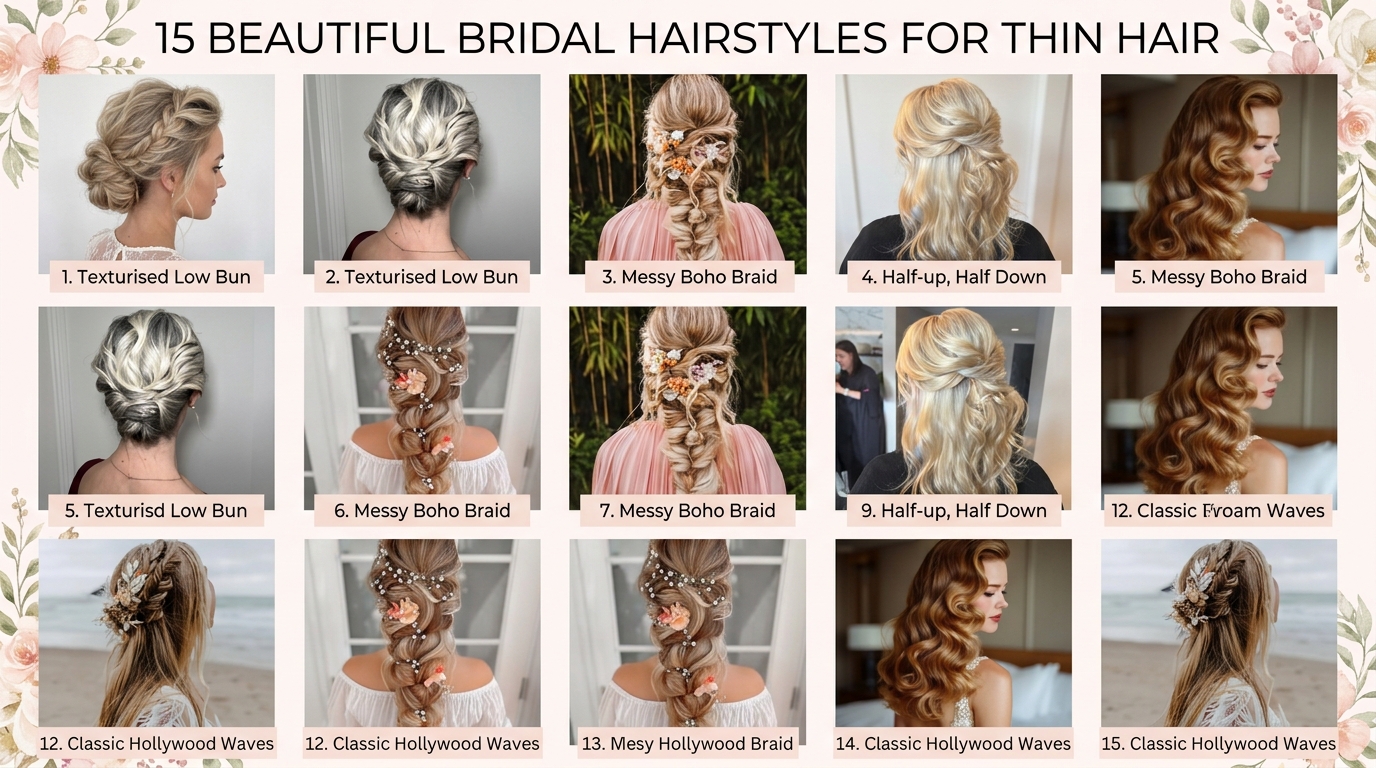
Choosing the right bridal hairstyles for thin hair can feel difficult when you want your wedding look to last all day. The good news is that many beautiful styles can add movement, create the appearance of volume, and complement your wedding dress. The good news is that thin hair can look beautiful in many bridal hairstyles. The right parting, gentle volume, suitable accessories, and thoughtful styling can create a balanced and elegant look. You do not need extremely thick hair to achieve a beautiful wedding hairstyle. Instead, focus on styles that work with your natural hair texture and length.
In this guide, you will discover 15 bridal hairstyles for thin hair, along with practical styling tips, accessory ideas, and advice for choosing a look that suits your wedding dress.
What Makes a Bridal Hairstyle Suitable for Thin Hair?
Thin hair usually refers to hair with a smaller number of strands across the scalp. Fine hair describes individual strands that have a small diameter. These are not the same thing, although someone can have both.
Understanding your hair type helps you choose a suitable wedding style.
For example, a person with fine hair may struggle to keep curls in place. Someone with low hair density may prefer a hairstyle that does not expose too much of the scalp.
A good bridal hairstyle should consider three things:
– Volume: The style should create a balanced shape without requiring excessive teasing.
– Hold: The hairstyle should remain comfortable and secure throughout the event.
– Natural texture: Your hair should still look like your hair rather than feeling stiff or overloaded with products.
The best option depends on your hair length, face shape, dress, weather, and personal taste.
15 Bridal Hairstyles for Thin Hair
1. Soft Hollywood Waves
Hollywood waves create a smooth, glamorous appearance that works well with many wedding dresses.
This style is particularly attractive for brides who want to wear their hair down. The curved shape of the waves adds movement, making the hair look fuller than a completely straight style may appear.
Ask your hairstylist to create waves with a curling iron and allow them to cool before brushing them gently into shape.
A lightweight styling product can help maintain the finish without making your hair feel heavy.
Best for: Medium to long hair, formal weddings, and brides who prefer a classic look.
Styling tip: A deep side part can create additional lift at the roots. However, choose a parting that feels comfortable and suits your natural growth pattern.
2. Half-Up Bridal Hairstyle
A half-up hairstyle keeps some hair away from your face while allowing the remaining lengths to fall freely.
It is a useful option for brides who cannot decide between an updo and a loose hairstyle.
The hair around the crown can be lifted gently before the upper section is secured. Soft curls through the lower section add movement.
Avoid pulling the upper section too tightly. Excessive tension can make the crown look flat and may cause discomfort.
Best for: Long or medium-length hair and romantic wedding themes.
Accessory idea: Add a small pearl comb or delicate hairpins where the upper section meets the loose hair.
3. Low Bridal Bun
A low bun is an elegant choice for brides who prefer a neat and timeless appearance.
It sits near the nape of the neck and works well with veils, earrings, and dresses with detailed necklines.
Thin hair can sometimes make a traditional bun appear small. A stylist can create a fuller shape by arranging the hair carefully or using a suitable bun accessory that blends with your natural colour.
Choose a soft, slightly textured finish rather than pulling every strand tightly against the head.
Best for: Formal ceremonies, minimalist dresses, and brides who want their accessories to stand out.
Styling tip: Test the bun before the wedding to check whether the veil can be attached securely.
4. Textured Low Chignon
A chignon is a hairstyle in which the hair is gathered and arranged into a knot or bun.
A textured low chignon has a softer finish than a perfectly smooth bun. Small sections of hair are arranged to create shape and movement.
This approach can be useful for fine hair because the hairstyle does not depend entirely on a large, tightly packed bun.
Your stylist can add gentle texture before arranging the hair. A few carefully placed strands around the face may also soften the overall appearance.
Best for: Classic weddings, satin dresses, and brides who prefer understated elegance.
Keep the texture controlled. Too much teasing or loose hair can make the style difficult to maintain.
5. Side-Swept Bridal Curls
Side-swept curls bring the hair over one shoulder, creating an attractive shape without requiring an elaborate updo.
The style can work especially well with one-shoulder dresses and gowns with an open neckline.
Start by creating soft curls. Then arrange the hair to one side and secure it discreetly with pins.
If your hair is very fine, a stylist may use a lightweight texturising product to improve grip before pinning.
Best for: Medium to long hair and brides who want a romantic appearance.
Styling tip: Make sure the pins are comfortable and hidden. The hairstyle should not require constant adjustment during the ceremony.
6. Bridal Ponytail With Soft Volume
A ponytail can look surprisingly elegant at a wedding when it is styled with care.
A high ponytail creates a modern appearance, while a low ponytail feels more understated.
For thin hair, gentle volume around the crown and soft waves through the ponytail can create a fuller silhouette.
Wrapping a small section of hair around the elastic gives the style a polished finish.
Best for: Modern weddings, contemporary gowns, and brides who want a practical hairstyle.
If you plan to wear a long veil, discuss the attachment point with your hairstylist before choosing a high ponytail
A braided updo combines the structure of an updo with the detail of a braid.
A stylist can create a loose braid and arrange it around a low bun or along the back of the head.
For thin hair, a loose braid may look fuller than a tightly pulled braid. The stylist can gently widen selected sections after securing the braid.
Do this technique carefully, because pulling the braid too far apart may loosen the style.
Best for: Garden weddings, outdoor ceremonies, and brides who like romantic details.
Accessory idea:** Small floral pins can add interest without overwhelming the hairstyle.
8. French Twist for Fine Hair
A French twist gathers the hair vertically at the back of the head and folds it into a neat shape.
It is a sophisticated option for brides who prefer a clean silhouette.
Because fine hair can sometimes slip out of an updo, preparation matters. Your hairstylist may use a small amount of texturising product and secure the twist with suitable pins.
A French twist does not need to look extremely tight. A slightly softer finish can complement both modern and traditional bridal outfits.
Best for: Formal ceremonies, structured dresses, and elegant evening receptions.
Ask for a trial appointment to check whether the style holds comfortably with your hair texture.
9. Loose Waves With a Middle Part
A middle part with loose waves creates a balanced, modern look.
The waves add movement while the centre part keeps the style simple.
This option may suit brides who prefer a natural appearance rather than a highly structured hairstyle.
If your roots tend to look flat, ask your stylist to add subtle lift near the crown. Avoid applying too much oil or heavy cream before styling.
Best for: Beach weddings, relaxed celebrations, and simple bridal dresses.
A middle part is not essential. A soft off-centre part may work better if your hair naturally falls that way.
10. Side-Parted Bridal Updo
A side part can change the appearance of an updo without requiring a complicated design.
The front section is parted to one side and arranged smoothly or with gentle movement. The remaining hair is gathered into a bun or twist.
This creates a clear shape around the face and may add the appearance of lift near the roots.
Best for: Traditional bridal looks and dresses with detailed necklines.
For a balanced finish, keep the volume proportionate to your face and accessories.
11. Half-Up Style With a Pearl Comb
A pearl comb can make a simple half-up hairstyle feel special.
The upper section of hair is secured at the back, leaving the remaining hair loose. A decorative comb is placed near the fastening point.
This is a useful choice for brides who want an elegant look without a large tiara or heavily decorated headpiece.
Choose a comb that is light enough to remain secure. Heavy accessories can slide through fine hair.
Best for: Romantic weddings, pearl jewellery, and understated bridal dresses.
If you plan to wear a veil, check whether the comb and veil can fit comfortably together.
12. Short Bridal Bob With Soft Texture
Brides with short hair have many attractive options.
A bob can be styled with soft waves, a side part, or a smooth finish. You can also add a small decorative clip above one ear.
There is no need to add extensions simply because your hair is short.
If you want more volume, your stylist can use a suitable blow-drying technique and lightweight styling products.
Best for: Short hairstyles, modern bridal looks, and minimalist weddings.
Try the style with your earrings and dress before the wedding. This helps you see how the hairstyle works with the full outfit.
13. Pixie Cut With a Bridal Headband
A pixie cut can look beautiful with a delicate headband or a small decorative clip.
The short length makes it easy to keep the hairstyle comfortable, while the accessory adds a bridal detail.
You can choose a sleek finish for a modern look or add a little texture for a softer appearance.
Avoid accessories that feel too heavy or slide out of place.
Best for: Very short hair, simple gowns, and contemporary wedding styles.
A headband can be especially useful when you do not want to change your haircut or add hair extensions.
14. Low Bun With Face-Framing Strands
A low bun with a few soft strands around the face creates a relaxed, romantic finish.
The bun keeps the hair organised, while the front sections soften the overall shape.
For thin hair, the bun can be arranged with a small support accessory if needed. The front strands should be selected carefully so that the style still looks balanced from the front and side.
Best for: Garden ceremonies, classic dresses, and brides who prefer a soft updo.
Do not leave too many strands loose. They may become difficult to manage in windy weather or during an active reception.
15. Bridal Hairstyle With a Veil and Subtle Crown Volume
A veil can be the main feature of your bridal hairstyle.
You can pair it with a low bun, half-up curls, or a simple twist. A little lift around the crown may help balance the veil’s shape.
The veil’s weight and attachment method matter. Fine hair may need discreet support to keep the comb secure.
Best for: Traditional ceremonies and brides who want to wear a veil.
Bring your actual veil to the hairstyle trial whenever possible. This allows your stylist to check the fit and adjust the style before the wedding day.
How to Make Thin Hair Look Fuller on Your Wedding Day
You do not need to change your natural hair to achieve a beautiful bridal look. A few practical choices can improve the final result.
Choose Lightweight Hair Products
Heavy oils, thick creams, and excessive conditioner can make fine hair appear flat.
Use products that suit your hair type. A lightweight mousse or texturising spray may help create lift and grip.
Start with a small amount. Adding more product is easier than trying to remove excess product after styling.
Wash Your Hair at the Right Time
The best washing schedule depends on your hair and the products your stylist plans to use.
Some hairstyles hold better when the hair has a little natural texture. Others work well on freshly washed hair.
Ask your stylist whether you should wash your hair the night before or on the wedding morning.
Avoid experimenting with a new shampoo or treatment just before the event.
Consider Gentle Root Volume
A blow-dryer and a suitable brush can create lift near the roots.
Your stylist may also use rollers or another technique to help the shape hold.
The goal is controlled volume, not excessive teasing. Too much backcombing can create tangles and make the hair harder to brush out later.
Use Hair Accessories Strategically
A decorative comb, headband, or a few well-placed pins can make a simple style look more detailed.
Choose accessories that complement your dress and jewellery.
For thin hair, lighter accessories are often easier to secure. Your stylist can recommend a suitable attachment method for your chosen style.
Think About Extensions Only If You Want Them
Hair extensions are optional.
If you want a longer braid, a fuller bun, or extra length for curls, extensions may help. However, the colour, texture, and attachment method should match your natural hair.
Discuss the available options with a professional before buying anything.
If extensions feel uncomfortable or do not suit your budget, choose a style designed for your existing length.
Which Bridal Hairstyle Works Best With Different Wedding Dresses?
Your hairstyle and dress should complement each other rather than compete for attention.
Strapless dress: Half-up curls, a low bun, or side-swept waves can help frame the neckline.
High-neck dress: A low bun or French twist can keep the neck area clear.
One-shoulder dress: Side-swept curls or a ponytail may balance the shape of the gown.
Minimalist dres s: Soft waves or a simple chignon can maintain a clean appearance.
Heavily decorated dress: A restrained hairstyle may prevent the overall look from feeling too busy.
These are starting points, not strict rules. Choose the combination that makes you feel comfortable and confident.
When Should You Have Your Bridal Hairstyle Trial?
Schedule a hairstyle trial several weeks before the wedding if possible.
This gives you time to compare options and make changes without feeling rushed.
Bring photographs of hairstyles you like, but also show your stylist pictures of your actual hair. A style that looks beautiful on someone with thick hair may need adjustments for your texture and density.
During the trial, check these details:
– Does the style feel comfortable?
– Does it work with your veil?
– Are the pins secure?
– Does the hairstyle suit your dress neckline?
– Can you move your head without feeling tension?
– Does the style still look good after some time has passed?
Take photographs from the front, back, and side. These views help you assess the complete hairstyle.
Common Bridal Hairstyle Mistakes to Avoid
A few small mistakes can make wedding-day styling more difficult.
Choosing a style without considering your hair texture: A highly structured design may require more support than your hair can comfortably hold.
Using too much product: Heavy products can weigh down fine strands and reduce natural movement.
Waiting until the wedding day to test a new look: A trial gives you time to make changes.
Ignoring the veil: Your hairstyle should support the veil securely rather than simply making room for it.
Following trends without considering comfort: You will be wearing the hairstyle for hours, so it should feel secure and comfortable.
Frequently Asked Questions
What is the best bridal hairstyle for very thin hair?
A half-up hairstyle, soft waves, or a carefully arranged low bun may work well. The best option depends on your hair length, texture, and preferred look.
Should a bride with thin hair wear her hair up or down?
Both options can look beautiful. Updos can create a neat shape, while loose waves add movement. Choose the style that works best with your hair and wedding outfit.
Can thin hair hold bridal curls?
Yes, although the results depend on your hair texture, condition, and styling method. Your stylist can test suitable products and curling techniques during the trial.
Are hair extensions necessary for a bridal hairstyle?
No. Extensions are optional and mainly useful when you want extra length or fullness that your natural hair does not provide.
Which accessories work well with thin bridal hair?
Lightweight combs, small clips, delicate headbands, and carefully placed pins can complement thin hair. The attachment method should match the hairstyle and accessory weight.
When should I wash my hair before my wedding?
Follow your stylist’s advice. The ideal timing depends on your hair type and the hairstyle you have chosen.
Final Thoughts
Thin hair does not prevent you from having a beautiful bridal hairstyle.
Soft waves, textured buns, half-up designs, elegant twists, and carefully chosen accessories all offer different ways to create a polished wedding look.
The most important step is to select a style that suits your natural hair rather than trying to copy a photograph exactly.
Plan a hairstyle trial, bring your veil and accessories, and discuss any concerns with your stylist. With thoughtful preparation, you can choose a look that feels comfortable, suits your dress, and reflects your personal style.